Here’s something that surprises most people the first time they hear it: on the Render Network, when you pay for a job, the tokens you spend are destroyed. Not moved to the company, not recycled — gone for good. That single fact is the doorway into understanding RENDER tokenomics, and it’s a lot less intimidating than the word “tokenomics” suggests. This is a plain-English tour of how the token works, where new ones come from, and why a claim you’ll see everywhere — that RENDER is “deflationary” and “scarce” — is only sometimes true.
Quick but important note before we start: this is an explainer, not investment advice. There are no price predictions here and no suggestion to buy, sell, or hold anything. The goal is literacy — so you can read the hype with clear eyes.
🎟️ What the RENDER Token Actually Does
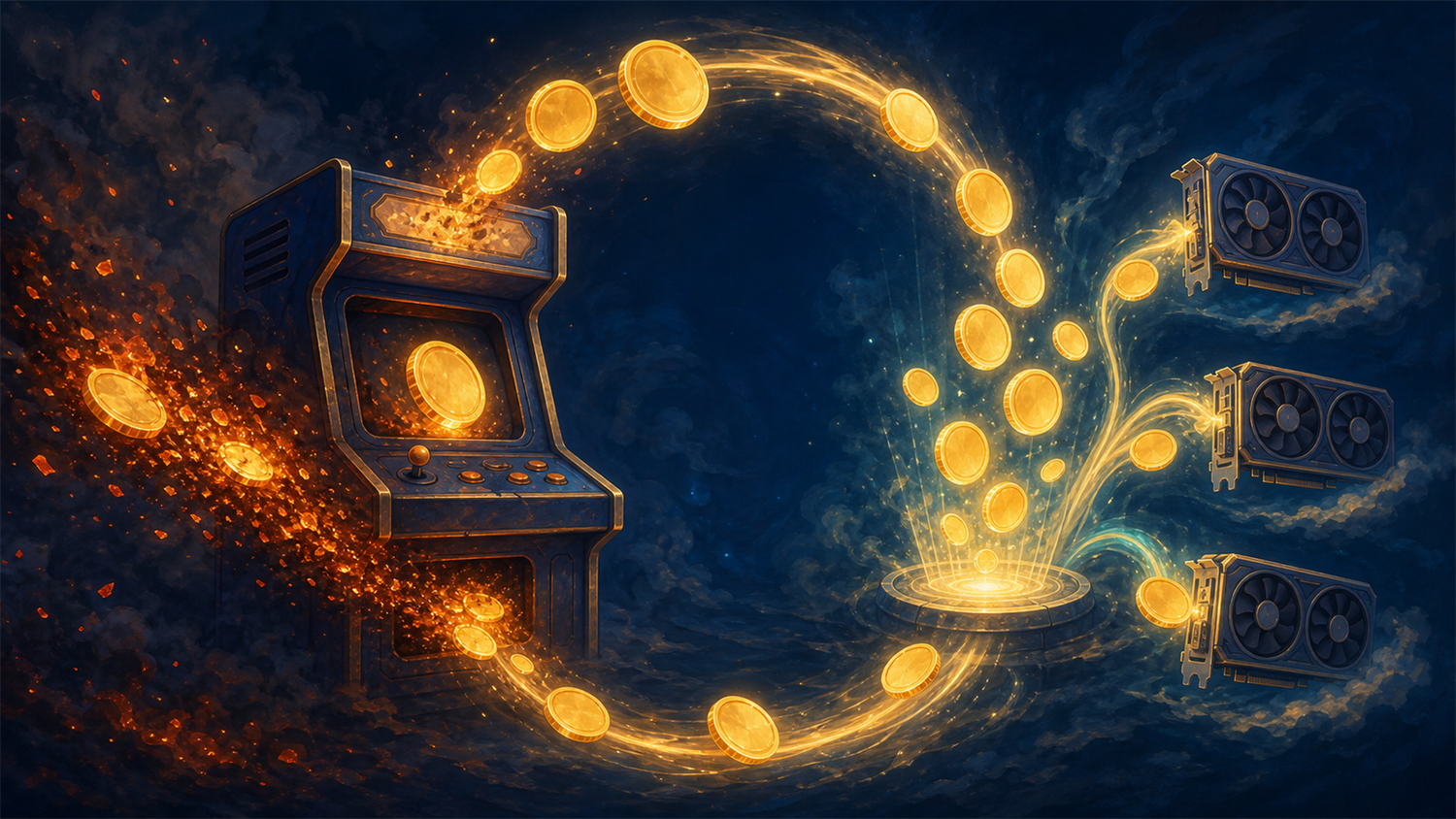
The easiest way to picture RENDER is as prepaid arcade tokens for a giant, global GPU arcade. You don’t buy them to own a slice of a company — owning RENDER gives you no dividend and no stake in Render or OTOY. You buy them to spend, feeding them into the machine to get a rendering or AI-compute job done.
There’s a clever detail here. Jobs on the network are priced in plain US dollars behind the scenes, not in a wobbly token amount. So a creator sees “this render costs about $40,” and the token quantity simply floats to match that dollar value at the moment of payment. That keeps costs predictable even when the token’s price is bouncing around. The token is the plumbing; the dollar figure is what the creator actually reasons about.
🔥 The “Burn” Side: Paying Destroys Tokens
Now the surprising part. When a creator pays for a job, their RENDER is burned — permanently removed from existence. In exchange, the network issues something called Render Credits (think non-transferable coupons) that actually pay the person whose GPU did the work.
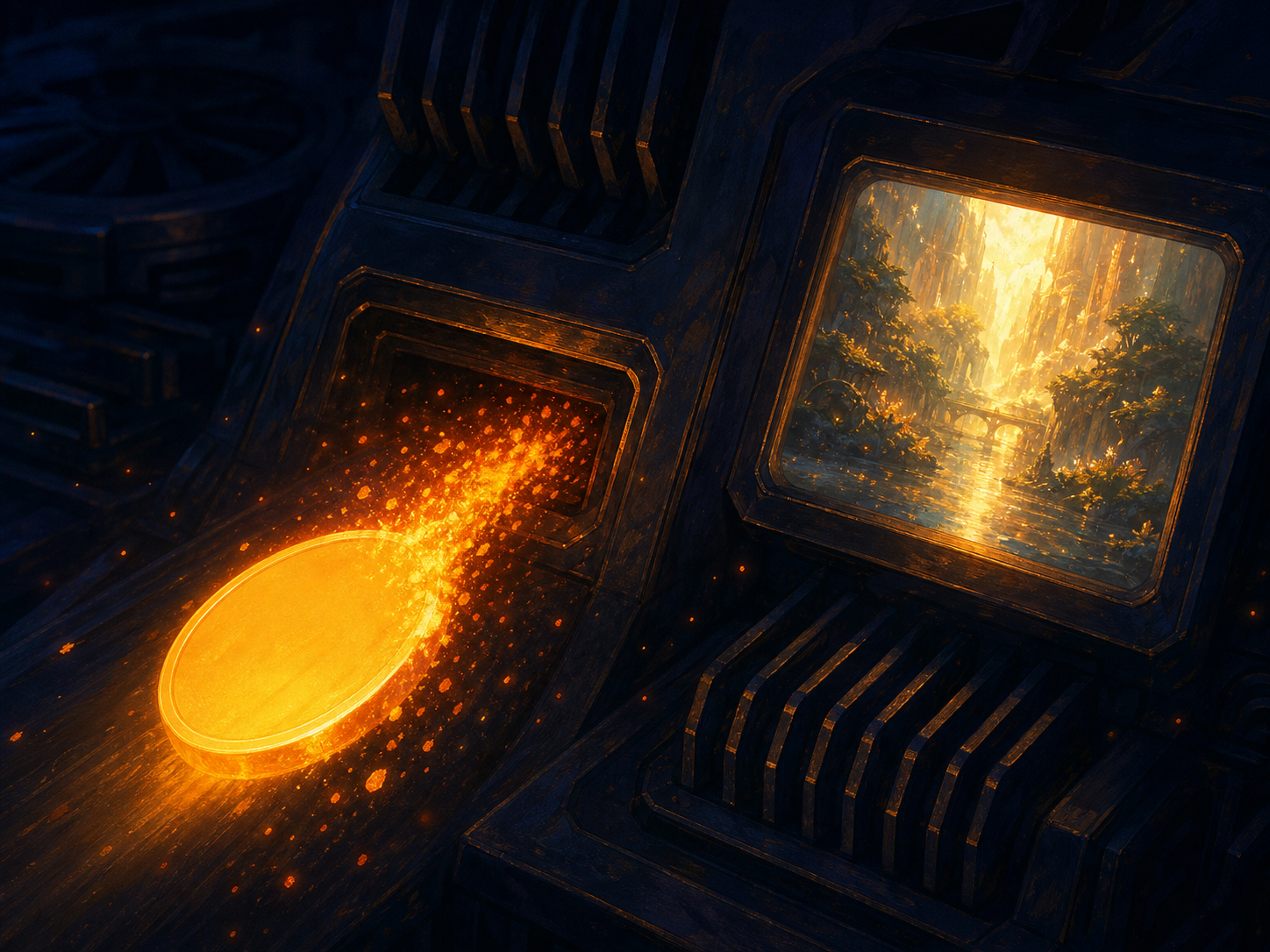
Why destroy perfectly good tokens instead of passing them along? It’s a deliberate design choice. Burning ties the token’s supply to real usage: every job that gets done takes some RENDER out of circulation forever. Hold that thought, because it’s half of the mechanism — and on its own it would make the token endlessly shrink. The other half is where new tokens come from.
🌱 The “Mint” Side: New Tokens Reward the GPU Owners
To keep graphics cards online and willing to work, the network has to pay the people who supply them — the node operators. It does that by minting brand-new RENDER on a published, steadily shrinking schedule and handing it out weekly based on how much work each operator did.
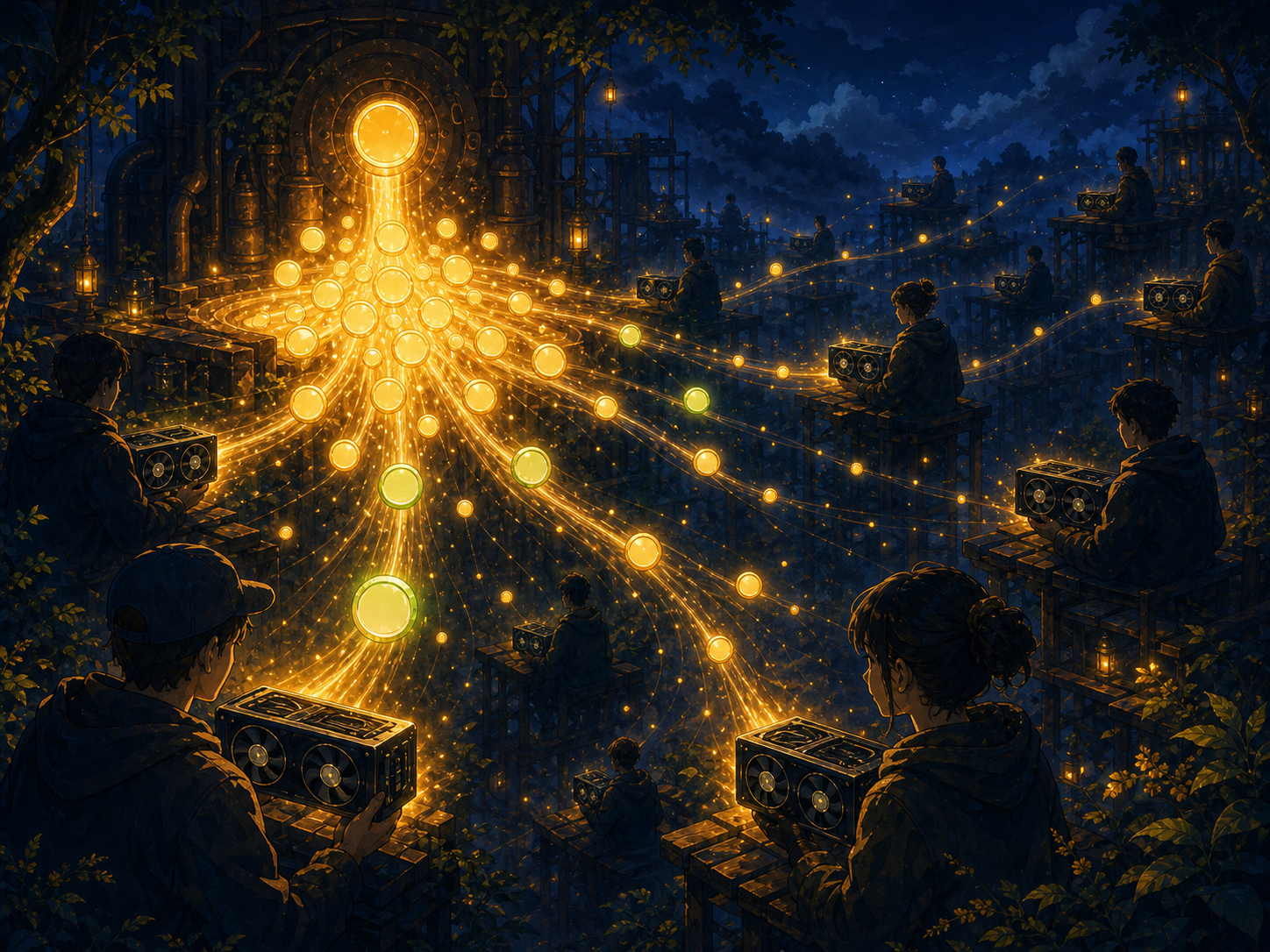
“Shrinking” is the key word. The network minted about 9.1 million RENDER in its first year under this system and about 5.9 million in the second — roughly 35% less. The schedule is designed to keep declining from there, cutting the payout roughly in half every few years. The idea is a strong early incentive to build up the supply of GPUs, tapering off as the network matures. Together, these two moves — burning tokens when people pay, minting tokens to pay workers — are what the project calls Burn-Mint Equilibrium, or BME.
⚖️ Why “Scarcity” Isn’t Automatic
Here’s where a lot of online explainers get sloppy, and where reading carefully pays off. Because RENDER is both burned and minted, whether the total supply shrinks or grows depends entirely on which flow is bigger in a given stretch of time.

If creators are busy and burn more tokens than the schedule mints, the net supply falls — that’s the “deflationary” story people love to tell. But if the network is in a quiet period and mints more than usage burns, the net supply actually grows. The word “equilibrium” is a hope, not a guarantee. So RENDER is not a fixed-supply coin like Bitcoin. You’ll see a “max supply” figure of roughly 644 million tokens quoted, but that’s a modelled ceiling derived from the emissions schedule — not a hard cap carved into the code. The honest takeaway: treat “scarce” and “deflationary” as conditional on demand, not as automatic facts about the token.
🔀 The Ethereum-to-Solana Move (and a Scam Warning)
If you’ve held RENDER for a while, or read older guides, you’ll bump into a bit of history that confuses people. The token started life in 2017 as an Ethereum token called RNDR. In late 2023, after a community vote, it upgraded to a Solana token called RENDER, completed on 2 November 2023 at a straight 1-to-1 swap.
The reason was practical plumbing. As the network pushed beyond 3D rendering into AI compute, Ethereum’s fees and speeds became a bottleneck, and Solana offered faster, cheaper transactions. For holders, the move was gentle: upgrading was optional, nobody’s old RNDR “expired,” and the official upgrade portal remains open indefinitely. If your tokens sat on a big exchange, the balance was generally converted for you during 2024. If you self-custodied, you used the official Upgrade Assistant to swap them yourself.
One safety flag worth burning into memory: token migrations are catnip for scammers. Fake “upgrade” and “migration” websites are a classic trap for draining wallets. The only official tool lives at upgrade.rendernetwork.com — anything else claiming to “migrate your RNDR” should be treated as a scam until proven otherwise. We go deeper on protecting your tokens in a companion guide, linked below.
📉 Price vs. Usefulness: Two Different Graphs
Finally, the trap that catches nearly everyone: confusing the token’s price with the network’s health. They’re two different graphs that happen to share a name.
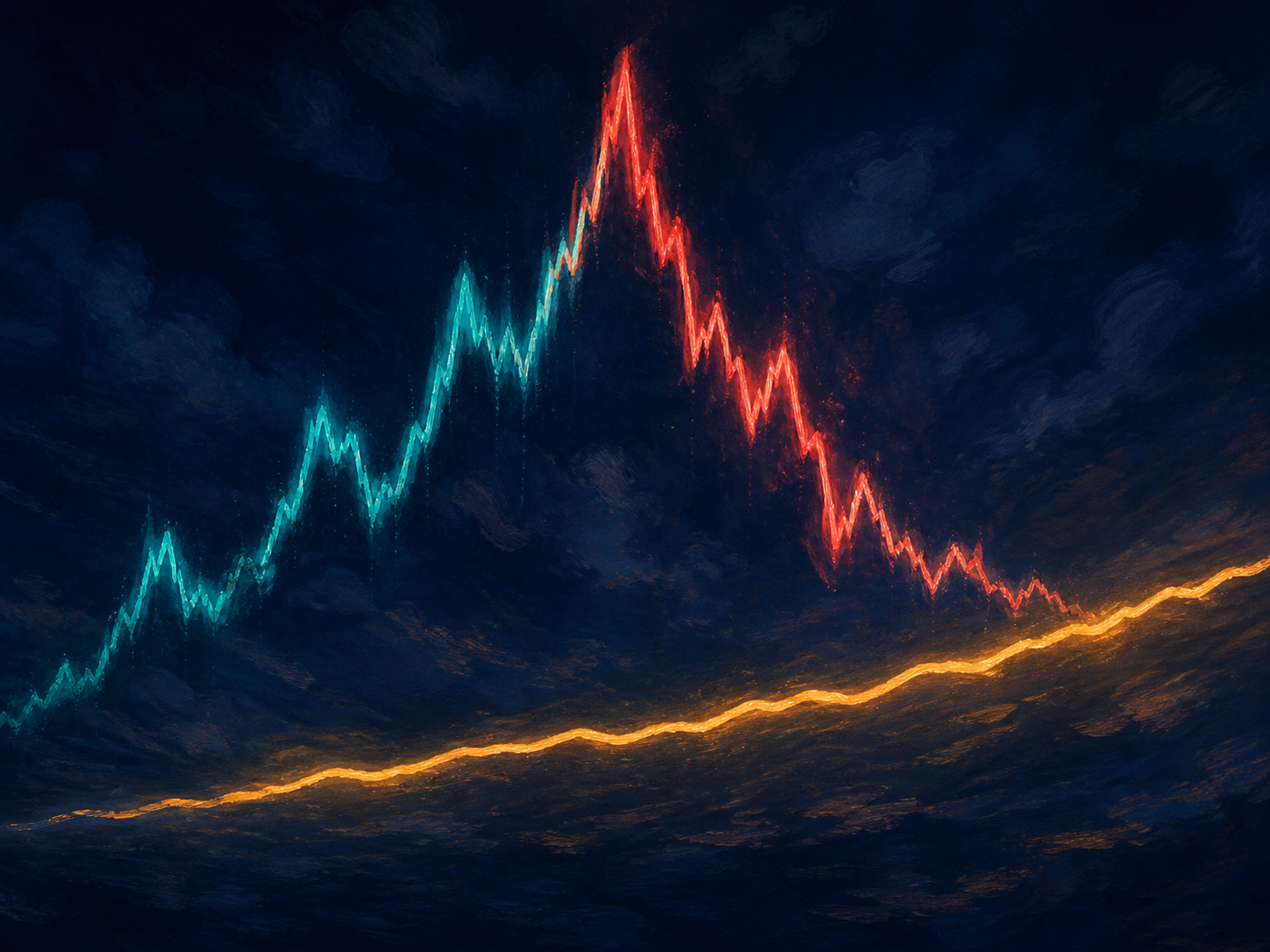
RENDER’s price has been a rollercoaster — it first traded for pennies in 2019, spiked to an all-time high around $13.57 in March 2024, and traded near $1.48 in mid-2026 (a snapshot that will be out of date by the time you read this). Across all of those swings, the network kept doing the same real work: rendering scenes and running compute jobs. Price is driven mostly by market sentiment, hype cycles, and the broader crypto market — not by a sudden change in how useful the network is.
This is also where a dose of caution belongs. A “utility” token is still a speculative, volatile asset, and the legal and regulatory treatment of tokens can change — a token’s classification isn’t settled forever. None of that is a reason to panic or to buy; it’s just the honest backdrop. Judge the network by whether people actually use it, and treat the ticker price as a separate, noisier story.
🧭 What This Means for You
You don’t need to be a trader to get value from understanding RENDER tokenomics. If you ever use the network, knowing that jobs are dollar-priced and paid in burned tokens tells you your costs are predictable. If you ever hold the token, knowing that supply is dynamic — not automatically shrinking — helps you tune out the “guaranteed scarcity” hype.
And if you take one habit away, make it this: understand the mechanism before any money is involved, and if you do hold, keep it somewhere safe. That last part — wallets, self-custody, and dodging the scams that swarm around tokens like this — is its own subject, and it’s the natural next step from here.
📚 Further Reading
- What Is the Render Network? — the big-picture starting point, if you want the whole story first.
- OTOY vs. the Render Network: Who Really Runs It? — who governs the network and the token.
- Keeping Your RENDER Safe on Solana — wallets, self-custody, and the scams to avoid (coming soon).
- Primary sources: the Render Knowledge Base’s Burn-Mint Equilibrium page, the Render Foundation upgrade page, and independent trackers CoinMarketCap and CoinGecko.
❓ Frequently Asked Questions
What is the RENDER token actually for?
It’s the fuel you spend to get rendering or AI-compute jobs done on the Render Network. It’s a utility token, not a stock — owning it gives you no dividend and no ownership of the network or OTOY.
What is Burn-Mint Equilibrium?
It’s the token’s economic model. When creators pay for jobs, their tokens are burned (destroyed); separately, the network mints new tokens on a shrinking schedule to reward the GPU owners who do the work. The two flows are independent.
Does RENDER have a fixed supply — is it deflationary?
Not in the way Bitcoin is. The roughly 644-million “max supply” is a modelled ceiling from the emissions schedule, not a hard cap. Supply only shrinks when usage burns more tokens than the network mints, so “deflationary” is conditional, not guaranteed.
Why did RENDER move from Ethereum to Solana, and did I have to do anything?
The network moved to Solana in November 2023 for faster, cheaper transactions as it expanded into AI compute. Upgrading was optional and 1-to-1; exchanges generally converted balances automatically, and self-custody holders used the official tool at upgrade.rendernetwork.com. Beware fake “migration” sites — they’re a common scam.
Is RENDER a good investment?
This article can’t answer that — it’s an explainer, not financial advice, and there are no price predictions here. What it can tell you is how the token works, so you can evaluate the hype yourself and remember that a token’s price and a network’s usefulness are two different things.
📚 Recommended Resources
Disclosure: some links below are Amazon affiliate links. If you buy through them, I earn a small commission — at no extra cost to you — which helps keep this site running.
To build real fluency in how tokens like RENDER work — beyond the hype — start here. (Still not financial advice; these teach the mechanics, not what to buy.)
- Token Economy: How Blockchains and Smart Contracts Revolutionize the Economy — Shermin Voshmgir · Book. The best plain-language tour of tokenomics — burning, minting, supply, and governance — which is exactly the machinery behind RENDER’s Burn-Mint Equilibrium.
- Mastering Bitcoin: Programming the Open Blockchain — Andreas M. Antonopoulos & David A. Harding · Book. The canonical explanation of how supply, keys, and blockchains actually work — the fundamentals that make “max supply” and “deflationary” claims easy to judge for yourself.
- Read Write Own: Building the Next Era of the Internet — Chris Dixon · Book. Why tokens exist at all — how they align the people who build, run, and use a network — with the Render Network as a live example of the pattern.